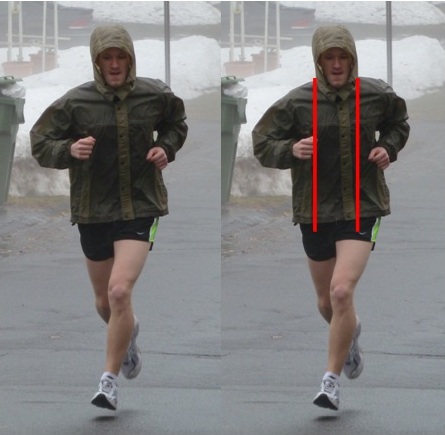
Rev3 Quassy Olympic
June 3rd, 2017
I have raced the Rev3 Quassy 4 times (2012, 2013, 2014, and 2015). Last year, I opted to race IM 70.3 Eagleman instead and to be honest, it felt WEIRD! It was a good change, but man did it feel odd to be on course the weekend of the race and not be checking my tire pressure, setting up transition, thinking about the water temperature, and such. This year, I was back!! And I branched out to try the Olympic this time.
Funny thing...
We Rev3 Quassy is called the Beast of the Northeast and most consider that the doing of the Half race on Sunday. It has 3800 ft of elevation change on the bike and 850 ft on the run. Having raced it four times and trained on it more times than I can recall, it truly is a beast any way you cut it.
However, the Olympic is just as formidable! Just look at the elevation change per mile comparison.
Rev3 Quassy Half Bike = 68 ft
Rev3 Quassy Oly Bike = 68 ft
Rev3 Quassy Half Run = 65 ft
Rev3 Quassy Oly Run = 59 ft
Sure, you can argue that you don't have the same total elevation by the end of the day, but the pain is of the same caliber all day long!
But enough of that. Let's get to racing!
PRE-RACE
As you might tell from my previous reports, I am 70.3-focused. However, I am focusing this year on some more intensity with three Olympics before heading back to the 70.3 in September. So I approached this with as much focus as I would an A-race. I shaved the legs on Wednesday, got a new haircut on Thursday, had my typical carbo-load breakfast on Friday, and tapered much like I would normally. Everything in place!
The only addition to this was a Thursday night sprint tri. I would have raced the previous week, but that race was cancelled. In order to get the cobwebs shaken out, Lake T it was!
RACE MORNING
Air Temp = 50-60F/10-15.6C (7-9:30a)
Water Temp = 64F/17.8C
Mostly Cloudy
I live approximately 40 minutes from the race site. Transition opened at 5:15a and based on previous experience, the front row parking is full about 20-30 minutes before that time. Therefore, I was up at 3:20am and parked at the race by 4:40a. Am I type A?, yes!
My morning breakfast was the usual; 3 over easy eggs, 2 pieces of toast, a banana, and a full jar of applesauce. I would swap my typical 1 hour pre-race Powerbar for a double scoop of UCan protein (chocolate) with half the water, and had a caffeinated GU gel 20 minutes before the swim start. For an Olympic, I start caffeine right away while at 70.3, I wait until mile 35 on the bike.
Mistakes are getting easier to overlook.
As I began setting up transition, I pulled out my bottles, shoes, kit, socks, gear, etc. I started to pull out my race nutrition when I realized that I had the UCan hydrate which goes into my aero bottle, but I had left the aero bottle on my desk at home. Uh-oh!! At a longer race, yes, that would have bothered me as I know I am not the best at maintaining my hydration throughout a race. However, given the air temps and shorter format of the race, I let it slide. That's one thing I'll never forget again! haha


SWIM
GPS
None. I don't wear it.
The swim is a clockwise triangle format. It was angled differently this year to avoid the glare of the sun on the second slide of the triangle. Whether good or bad, the sun spent most of the race hiding, so there was no chance of being blinded.
I lined up in the front line of roughly 15-20 men for the first wave of the day. This meant the swim would be smooth, but the rest of the race would likely be quiet. As the air horn went off, I ran out into the water until I could no longer lift my legs above water. I dove in and began swimming. I noticed multiple people to my left and right doing dolphin dives. For a split second, I thought "Should I do that too? I don't want to lose ground." That was quickly answered by the observation that those dolphin diving were not gaining in placement. I kept swimming.
The pack quickly divided. There were a group that broke away early on. I believe post-race that it was 3-4 swimmers. As they separated from the main group, I noticed that no one was left on either side. As is my norm, I found myself in calm, open water. As much as I would prefer to have a draft and do better with one, I am quite used to swimming alone.
Holy Veering!!
I know I veer left as I swim. I do my best to compensate for that by shooting right of my target. But on that morning, my body was determined to head off into the open lake! I can't even blame other swimmers!! These are times that I wish I wore my GPS in the swim - so that I could see how far off course I swam. I did begin to dig into me mentally, but I decided to ask myself as a coach what to do. I just kept correcting and realized it was something I would have to work on. I couldn't completely fix the issue right then, so why worry?
I've been working lately on productive mental talk
and today that helped!
As I came to the end of the swim, of course my body had one last laugh at me by mixing up the arrangement of the final two buoys and swinging extra wide. But I made it to the swim exit, popped up, and continued on all the same.
SWIM = 21:58
Not bad for veering wide for most of the course.
My dad informed me afterwards that this is one way he can always pick me out of a swimming crowd. I have a specific rhythm in my stroke and I always veer left. Thanks Dad!!


TRANSITION 1
If there is one thing to note about the elevation change in the Quassy course, it is that it's spread out quite evenly. Unlike some courses that have sections of all the elevation gain and others that are quite flat, Quassy has hills all day long; even coming out of the swim!
Out of the water, you head uphill to the parking lot where transition is set up. They do offer an aid station just before the transition entrance which is nice.
I found my bike, got out of the wetsuit, put on my bike shoes, a pair of light winter gloves, sunglasses, helmet, and was off!!


BIKE
GPS
Screen 1 = Cadence, Mileage, & HR
Screen 2 = Average Lap HR (never looked at it)
Normally, I never put my shoes on in transition, but the bike course begins with... Wait for it... an uphill! I made the decision to not attempt getting into my shoes while on a hill. In hind sight, I think I'd go back to leaving the shoes on the bike.
Live and learn!!
However, I did make another first time change that worked out well. I have raced Quassy Half before with 50 degree air temps at the start. In my recollection, it was FREEZING for the first 10 miles or so. I survived and did fine, but it wasn't a pleasant start to the day. Being that today was even shorter, I knew I wouldn't have as much time to warm up. Therefore, I opted for the light winter gloves (they cover the full fingers). It took me extra time in transition, but the bike was much more comfortable.
Ok... Now the course!
The bike course is a single-loop, lollipop format with the first and last roughly 5-6 miles being the same. As mentioned, the elevation gain is comparable to the Half race based on per mile. Much of the course is even the same as the Half. We simply use a different initial/final 4 miles of road and cut out one large chunk of the Half. Altogether, the elevation is quite spread out. A forewarning is that it can be tough to find a time/place to take in nutrition as you are busy going up hill, tucking in to fly down hill, or making a turn. I fell into that pit 3 of the 4 previous times I raced here.
As I predicted at the start line, the bike course was really quiet. I saw roughly four other riders the entire 24.8 miles. This makes the race a much bigger mental struggle than being in a pack. While I don't do my best in these conditions, I believe I've learned to cope adequately.
My silent goal was to hold the HR somewhere between my sprint and 70.3 race ranges. In a sprint, I am up at 170+ bpm. In a 70.3, I am around 158-162 bpm. I held a fairly constant 160-165 bpm for the majority of the race and felt strong about that. I never felt my body begin to fatigue and was able to put out surges when I needed to. I do think I could hold the HR higher, but I was happy with the outcome as is.
Nutrition was different today! As I mentioned earlier, I did not have my front hydration, so I had to remind myself to reach down and grab a frame bottle. I had guessed that over 5-6 drinks, I took in 10-12 ounces while in reality, it was more like 4 ounces. I did get in one caffeinated gel around mile 15 and it went in much faster than I expected. I was happy with that - no GI push backs!
As I came up to the final 6 miles, I began to push. I wanted the last quarter of the bike to be pushed harder than the previous three-quarters. It was made a bit easier by the fact that it's net uphill in those final miles. Mission accomplished.
BIKE = 1:12:48

TRANSITION 2
I spent half of the bike debating what to do in transition. Normally, I go without a shirt if I'm allowed to - which I am at Rev3. But it was colder than the typical race, so maybe I would stay in my sleeved jersey. I raced in it on Thursday as a test and it's not bad. It isn't as cool as a bare chest, but it is workable. I did leave the bra in transition as well. That could be a happy medium. In the end, it was above my typical 50-degree cut off, so I went without the shirt.
I rolled into transition, racked the bike, took off the helmet and glasses, sat down, put on my shoes, grabbed my gear and ran. While moving, I put on my hat and race belt and switched the watch to run mode.
RUN

GPS
Screen 1 = Heart Rate
Screen 2 = Pace (I forgot I had put this on there)
What's that in my shoe??
I'm used to feeling like there's something in my shoe. Just a crease in the sock or rock in the bottom of the shoe. I kept running a quarter mile until I realized what it was. On Thursday, the clip to my Lock Laces fell off. I couldn't put it back on at the race, so I left it in the shoe figuring I'd remember to put it back on the laces Saturday morning. Nope! I had even forgotten where I put it until just then.
Funny thing...
I stopped, took off my shoe, got the clip out, put my shoe back on, and continued to run the entire race with that clip in my left hand. I'd just put it back on when I got home. But somewhere between the finish line and chatting with friends just outside the finisher's chute, I lost it. Haha!!
My goal was to stay comfortable for 2 miles, survive the nasty hill at mile 3, then push mile 5 and 6 hard. The pace does not reveal this, but my HR does. I was steady (actually slowly increasing) from the start through mile 4. Then I spiked up a bit and held it up through the finish. Again, a process goal complete!!
As I left Quassy, I was about 0.05 miles from "Mais," the athlete in front of me. He held his distance all the way through mile 3.
As we ran down covered roads, I debated on whether to stop and pee. I had been wanting to pee since the swim. I opted not to only because I knew that there were porta johns easily accessible at each aid station. I'd stick to my rabbit until I absolutely had to leave him.
At mile 3, there was a quick downhill before the nasty hill. Apparently Mais is not a downhill runner and I quickly passed him. As we came to the hill, I put my head down and repeated "Just survive" to myself. No need to overcook the legs here. I wanted to do that in mile 5 and 6. Plus, the last time I was on this hill was 2015 and I had to walk it - I was toast then. I wasn't going to be now.
Another athlete passed me towards the top. I held with him through 3.5 miles and then he drifted away a bit. As we hit mile 4, the road begins to decline and I began to push. With that, I held onto this new athlete (he was in a red, white, and blue kit and in my age group!). I held onto him through the end but was never able to close. We both did however, close in on two other athletes in the final mile. The final 1.5 miles is uphill; the same hill we ran down to start the run. It's a tough section only because it's the very end and if you've paced it well, you're already pushing hard at that point. I came within 25 yards of one athlete, but as he told me post-race, he could hear my feet and that was motivation enough to put in an extra push. We were 4 seconds apart. I was not unhappy with that finish though. It was a solid process run!!
RUN = 39:58
FINISH = 2:17:37
POST-RACE
The afternoon of hot flashes.
After I finished, I talked with a few friends and then went to put clothes on as I began to cool off. About 30 minutes later, I was warm and began shedding layers. I spent about 1.5 hours spectating and then got cold again - back on with the clothes and jacket. A little later, off they come. I would realize the next morning that I likely had a cold, but wow was that a weird afternoon!!

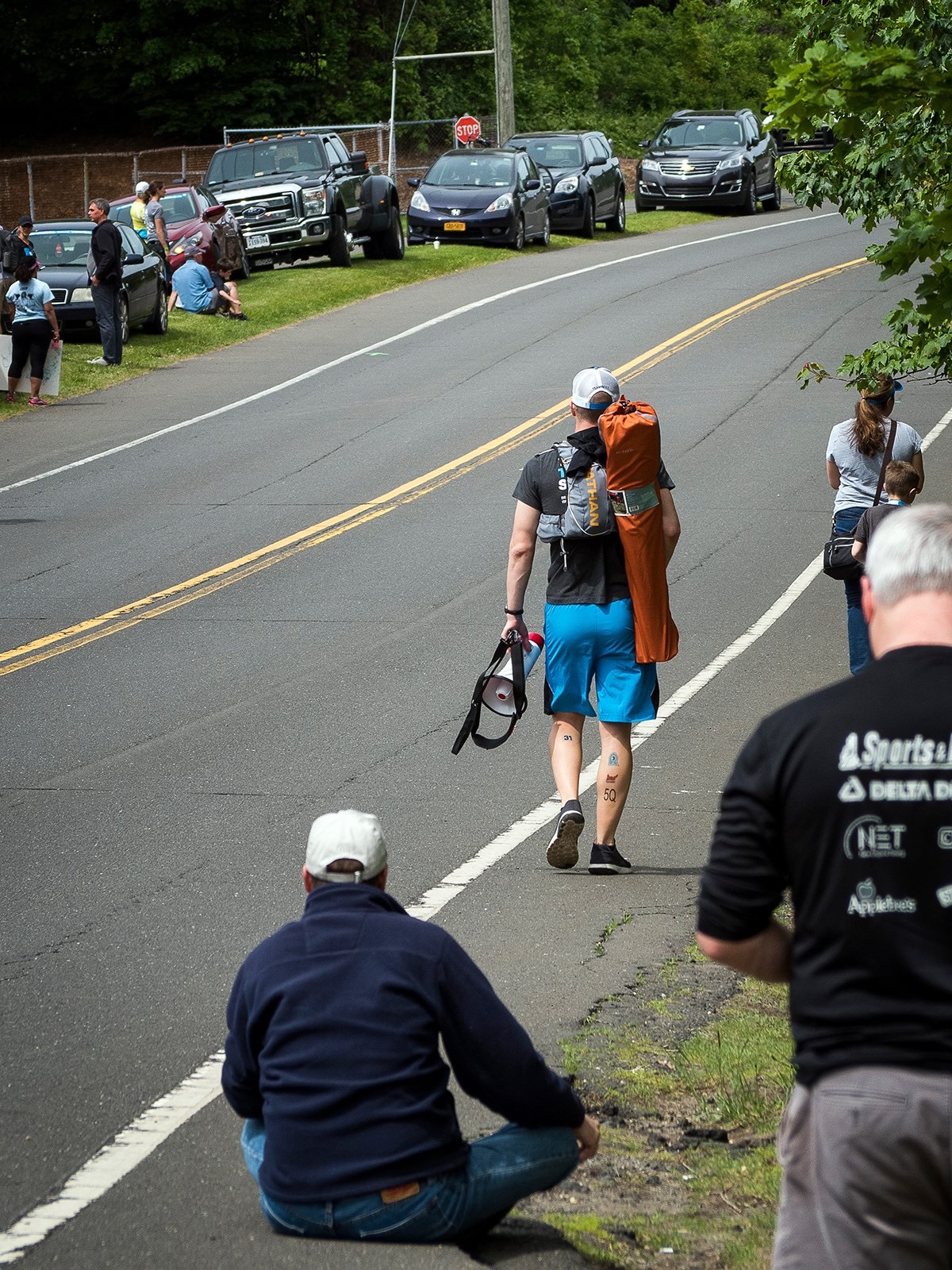
I spent most of the afternoon under the bridge at mile 5.6 of the run taunting people as they came up the final hill. Then I packed my transition gear, got some food, and volunteered at packet pick up.
All around, it was a GREAT day!!
-------------------------------------------------------------
QUESTIONS
1. Have you raced a Rev3 event before?
Yes, Quassy and Cedar Point. I'll race Poconos and IM 70.3 Maine (still a Rev3 Race) this year.
2. Do you race with process goals, metric goals, or both?
I much prefer process goals, but supplement with metric goals at times as long as my perception is matching them.
DREAM. BELIEVE. ACHIEVE.